Most automation ROI analyses calculate what you gain by automating. This one looks at the other side: what are you actually losing by not automating your repetitive web workflows? The number is almost always larger than people expect.
Calculating the True Cost
Let’s build a realistic model for a digital marketing professional doing moderate-volume outreach and form-based workflows:
Weekly form-based tasks (conservative estimate):
- Directory and citation submissions: 2 hours/week
- Platform and tool registrations: 1 hour/week
- Outreach form submissions: 1.5 hours/week
- Administrative form filling: 0.5 hours/week
- Total: 5 hours/week
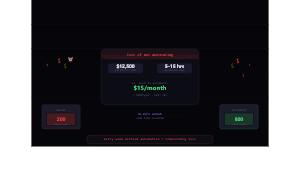
At a $50/hour value of professional time: $250/week × 50 working weeks = $12,500/year in manual form work for a single professional.
For a 5-person marketing team: $62,500/year.
Automation cost (Fillnex Pro): $180/year. ROI: 69x.
The Compounding Losses You’re Not Tracking
Beyond raw time, there are compounding costs to not automating that don’t appear in a simple time calculation:
Volume ceiling: Without automation, there’s a hard ceiling on how many platforms you can submit to, how many citations you can build, how many outreach touchpoints you can create. You’re leaving opportunities on the table because manual work is the bottleneck.
Consistency degradation: Manual work gets less consistent under volume pressure. When you’re filling your 50th directory form of the day, the quality of your NAP formatting, description text, and category selection degrades. Automation maintains perfect consistency at any volume.
Opportunity cost of focus: Manual data entry occupies cognitive bandwidth that could go toward strategy, analysis, and creative work. The opportunity cost of “mental overhead tax” on repetitive tasks is real but hard to quantify — studies suggest cognitive fatigue from repetitive tasks reduces subsequent creative output by 10–25%.
Team morale: Repetitive manual work is consistently ranked among the most demotivating job tasks. Teams that spend significant time on manual data entry report lower engagement and higher turnover. The retention cost of high-turnover roles is $10,000–$30,000+ per employee — manual work is a contributing factor.

The First-Mover Advantage
In competitive SEO and marketing environments, the businesses automating their outreach workflows are submitting to 3–5x more platforms than those doing it manually. Over 12 months:
- Manual team: 200 directory citations, 50 platform profiles, limited outreach volume
- Automated team: 600–800 directory citations, 150+ platform profiles, high outreach volume
The compounding effect of 3–4x more citations, backlinks, and brand mentions over a year creates a ranking and visibility advantage that’s very difficult for manual-only competitors to close.
When “Not Now” Becomes “Never”
The most common reason professionals don’t automate is “I’ll set it up when I have time.” But the workload that makes manual processes time-consuming is the same workload that makes setup feel like it needs to wait.
The setup time for browser automation is genuinely small — a few hours for initial configuration, then incremental additions. Every week of delay is another week of the full manual cost, plus one week less of accumulated automation benefits.
The break-even point — where cumulative time saved exceeds setup time invested — typically arrives within the first 2–3 days of use for anyone doing moderate form volumes. After that, every day without automation is a pure loss.
What $15/Month Actually Buys
Fillnex Pro costs $15/month. That’s:
- Less than one hour of professional time at market rate
- Less than 20 minutes of an agency’s billable rate
- Less than 3 CAPTCHA manual solves at freelancer rates
- Less than one premium directory submission service charge
For a tool that saves 5–15 hours per week of professional time, the calculation isn’t really about whether to automate. It’s about how much money you’re willing to leave on the table each month before you do.
→ What is a browser automation extension?
→ How to save 10+ hours a week with form automation
Stop paying the manual work tax
$15/month. Saves 5–15 hours per week. Starts paying back day one.
Start Free Trial →